

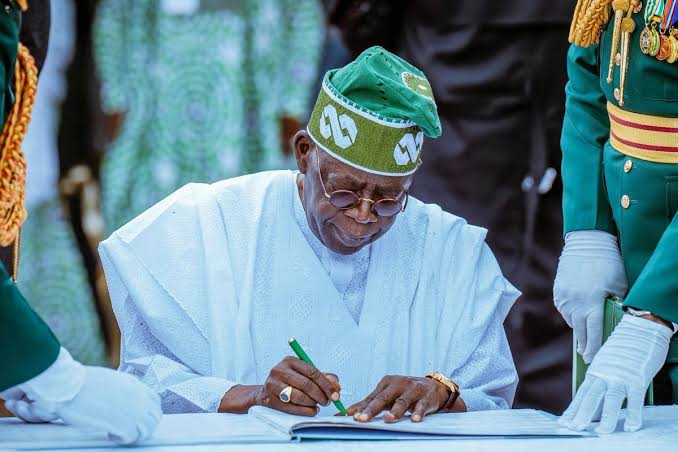
President Bola Ahmed Tinubu has officially signed the Electoral Act, 2022 (Repeal and Re-Enactment) Bill 2026 into law, introducing sweeping reforms to Nigeria’s electoral system just over a year before the highly anticipated 2027 general elections.
The newly signed legislation repeals and replaces the 2022 Electoral Act with key amendments aimed at strengthening election transparency, improving timelines, and addressing technical and legal challenges observed in previous polls.
National Assembly Passes Amended Electoral Bill After Heated Debate
The bill was passed by both the Senate and the House of Representatives in mid-February 2026 after weeks of intense deliberations and emergency sessions. Lawmakers had initially disagreed on critical issues, especially concerning election result transmission and scheduling timelines.
After harmonizing differences between both chambers, the National Assembly approved the final version of the Electoral Act Amendment Bill 2026 and transmitted it to President Tinubu for assent.
Electronic Transmission of Results Retained — With Manual Backup
One of the most controversial provisions in the amended law is Clause 60, which governs the transmission of election results.
Under the new law:
- INEC is permitted to electronically transmit results from polling units to the INEC Result Viewing Portal (IReV).
- However, a manual transmission option is allowed as a fallback in cases of network failure or technical disruptions.
This hybrid system sparked heated debate in the Senate, which voted 55–15 in favor of retaining the manual backup option. In the House of Representatives, some minority lawmakers staged a walkout, insisting on mandatory real-time electronic transmission without exceptions.
The compromise is expected to balance technological innovation with practical realities, especially in rural areas where internet connectivity remains inconsistent.
Election Notice Period Reduced to 300 Days
Another significant amendment appears in Clause 28, which reduces the mandatory notice period for elections from 360 days to 300 days.
This change grants the Independent National Electoral Commission (INEC) greater flexibility in scheduling elections. With the adjustment, the 2027 presidential and National Assembly elections could potentially be held as early as December 2026 or January 2027.
The move is widely seen as a strategic effort to avoid a possible clash with religious observances such as Ramadan and Lent, which could have overlapped with the original February 2027 election timetable.
Changes to Party Primaries and Electoral Procedures
The amended Electoral Act 2026 also introduces reforms in party primary elections, reportedly:
- Favouring direct primaries and consensus arrangements
- Removing certain indirect primary mechanisms
- Updating penalties for electoral offences
- Clarifying timelines and procedural guidelines
These changes are aimed at resolving legal ambiguities that previously led to pre-election litigations and internal party disputes.
What This Means for the 2027 Elections
With the signing of the new Electoral Act 2026, Nigeria’s electoral framework has undergone another major transformation ahead of the 2027 general elections.
Political analysts say the reforms could influence campaign strategies, election logistics, and voter confidence. However, debates around electronic transmission and the manual fallback clause are likely to remain central to public discourse in the coming months.
As preparations for 2027 gather momentum, attention will now shift to INEC’s implementation strategy and how political parties adapt to the revised legal landscape.





Leave a comment